
How Wide Is a Flatbed Trailer? Standard Widths & Legal Limits

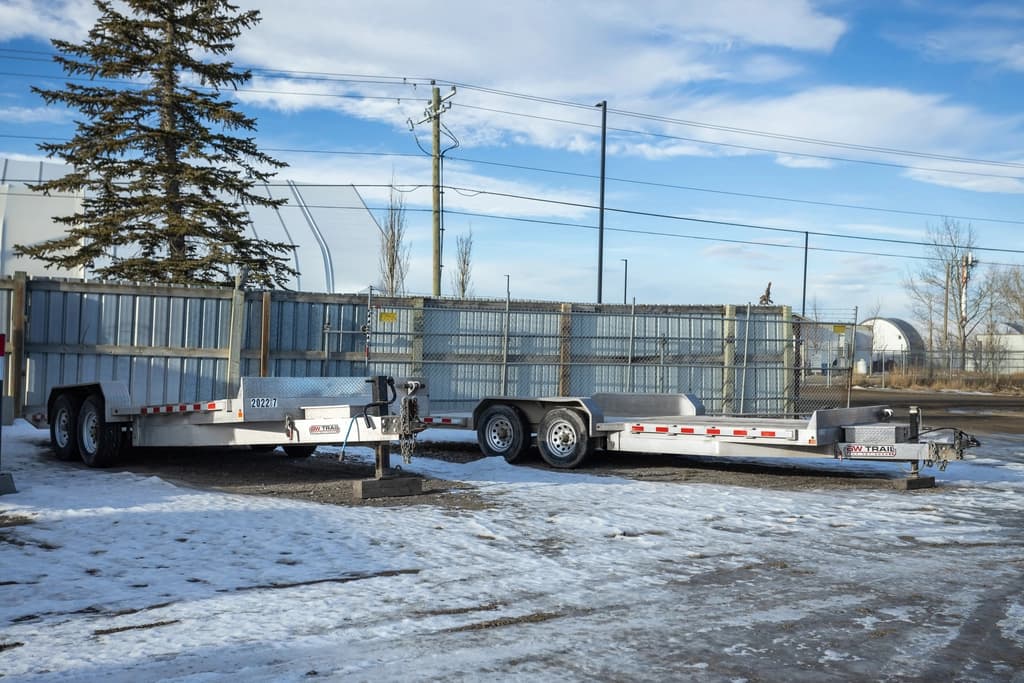
Flatbed trailers — also called flat deck trailers — are versatile and essential for transporting goods, machinery, and equipment. Whether you're hauling construction materials, vehicles, or heavy machinery, understanding how wide a flatbed trailer actually is matters for safe and legal transportation. In this guide, we'll cover the typical width dimensions, the legal limits, and the one distinction most people miss: deck width is not the same as overall width.
Standard Width of Flat Deck Trailers
The standard width of a flat deck trailer typically falls within the range of 96 to 102 inches (8 to 8.5 feet). This width includes the trailer bed and any permanent attachments, such as rub rails or stake pockets. However, it's essential to note that regulations governing trailer width may vary by jurisdiction, so it's crucial to check local laws and regulations before hitting the road.
Factors Influencing Trailer Width
- Legal Limits: Most countries and states have maximum width limits for trailers traveling on public roads without a special permit. In the United States, for example, the federal maximum width for commercial motor vehicles on the National Network is 102 inches (8.5 feet). Trailers exceeding this width may require wide-load permits and safety escorts.
- Trailer Type: Different types of flat deck trailers may have varying widths. For example, standard flatbed trailers often have a width of 96 inches, while wide-body or equipment trailers may be 102 inches wide to accommodate wider loads.
- Axle Configuration: The width of the trailer axles can also impact the overall trailer width. Trailers with wider axles generally offer better stability, especially when hauling heavy or top-heavy loads.
- Deck Height: The height of the trailer deck can influence its width. Lowboy trailers, which feature a lower deck height to accommodate tall cargo, may have wider decks to maintain stability.
Importance of Choosing the Right Width
Selecting the appropriate trailer width is critical for several reasons:
- Safety: A trailer that is too wide for the road or lane can pose a safety hazard to other motorists and pedestrians. Staying within legal width limits ensures safe travel on public highways.
- Cargo Compatibility: Ensure that the trailer width is sufficient to accommodate the width of your cargo. Cargo overhanging the sides of the trailer can be dangerous and may violate legal regulations.
- Maneuverability: Wider trailers may be more challenging to maneuver, especially in tight spaces or narrow roads. Consider your driving skills and the routes you'll be taking when choosing a trailer width.
For your convenience, we offer a selection of hitch receivers for rent along with our trailers.
Visit accessories to explore our available options and find the right hitch receiver for your needs
However, if you frequently transport oversized loads such as industrial machinery, prefabricated buildings, or heavy construction equipment, a wider trailer may be necessary. Custom trailers with extendable or adjustable decks are available to accommodate these larger loads.
When deciding on the right trailer, consider factors such as the weight of your cargo, its dimensions, and whether you will be transporting items that exceed the standard width regularly. Companies like Excel Trailers offer specialized trailers that cater to these needs, ensuring that you can transport your cargo safely and efficiently.
Types of Cargo for Flat Deck Trailers
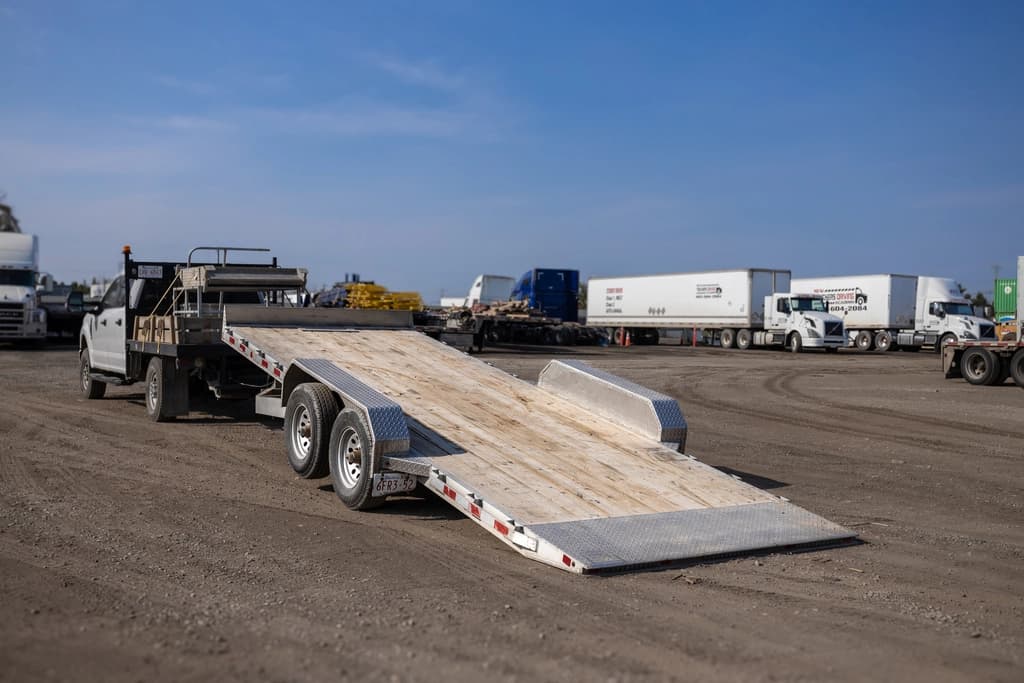
Flat deck trailers are highly versatile and can carry a wide range of cargo, which is why they are often the preferred choice for industries like construction, agriculture, and logistics. Some of the most common types of cargo that benefit from flat deck trailers include:
- Construction Materials: Steel beams, concrete blocks, and lumber are frequently transported using flatbed trailers. Their open design makes it easy to load and unload heavy items with a forklift or crane.
- Heavy Machinery and Equipment: Bulldozers, cranes, and other construction equipment that are too large for enclosed trailers can be easily secured on a flat deck.
- Vehicles: Trucks, tractors, and other large vehicles can be transported using a flat deck trailer, especially if they are oversized or cannot be driven to their destination.
The open nature of a flat deck trailer makes it particularly useful for hauling irregularly shaped items that wouldn't fit inside a traditional enclosed trailer. Additionally, since these trailers allow loading and unloading from the sides or top, they offer more flexibility in how cargo is positioned and secured.
Deck Width vs. Overall Width — The Number That Actually Matters
When a spec sheet says a trailer is 102 inches wide, that is the overall width — the outside measurement including rub rails and stake pockets. It is not how much deck you can actually load on. Those are two different numbers, and the gap between them is what catches people out at the yard.
On a standard flat deck, the deck sits between the wheels, so the fenders eat into the usable surface. A trailer that measures 102 inches overall typically gives you only about 82 inches of flat deck between the fenders. That is enough for a car or an ATV, but a standard 48-inch pallet pair (96 inches) will not fit.
On a deckover (sometimes called a deck-above or over-the-wheel trailer), the deck is built on top of the wheels. There are no fenders at all, so the usable surface runs edge to edge. Our 8' × 20' deckover measures 102 inches overall and gives you 97.5 inches of clear deck — enough for two 48-inch pallets side by side, with room to strap them down.
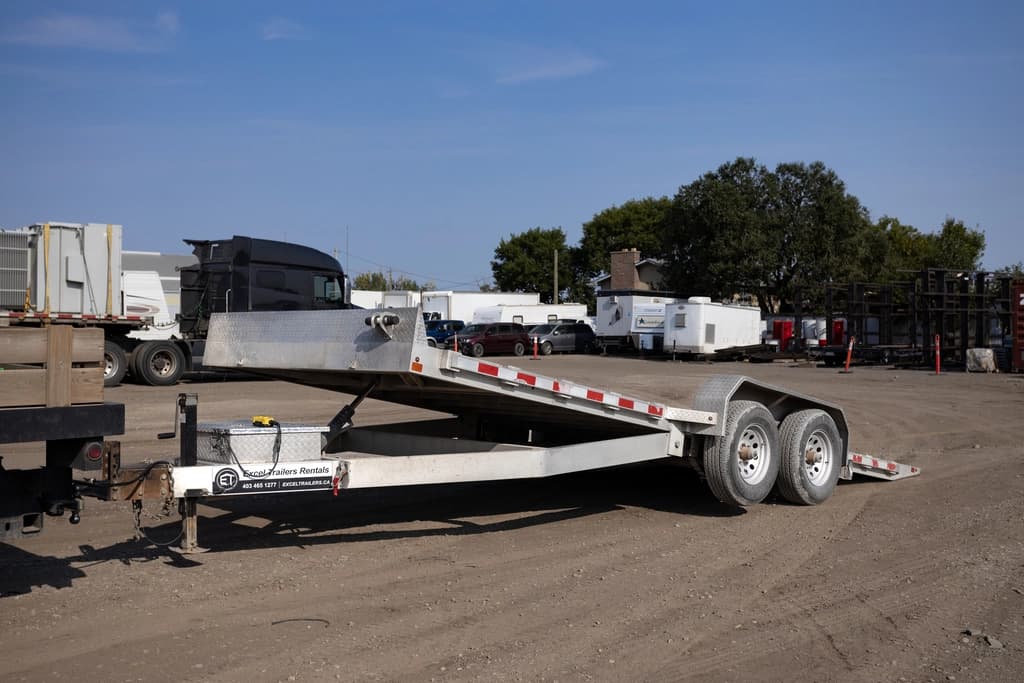
The trade-off is height. A deckover deck sits about 31 inches off the ground versus roughly 22 inches on a tilt-style flat deck, so you load with slide-in ramps rather than a tilting deck. That is fine for equipment, but too steep an angle for most cars. If you are moving a vehicle, use a car hauler with a winch instead — the whole deck tilts to the ground, and the winch pulls on anything that will not drive on under its own power.
Renting in Calgary?
If you need the full 97.5 inches of deck — pallets, lumber, wide farm implements — that is a deckover, not a standard flat deck. If your load is low to the ground, you want the tilt deck instead.
When You Need an Oversized Flat Deck Trailer
There are situations where a standard 8.5-foot-wide trailer won't be enough, especially when transporting unusually large or heavy loads. In these cases, a wider or extendable flat deck trailer is necessary. These trailers can extend up to 80 feet in length and are ideal for carrying extra-long items like wind turbine blades, bridge components, or industrial tanks.
Oversized trailers are also commonly used in industries such as oil and gas or renewable energy, where equipment is often too large for standard shipping options. It's important to note that transporting such oversized loads typically requires a more detailed logistics plan, including route planning and obtaining the necessary permits for oversize loads.
If your cargo frequently exceeds the standard dimensions, consider working with a specialized trailer provider like Excel Trailers to customize a flat deck trailer that can handle these larger loads. They offer a variety of extendable and customizable trailers designed specifically for oversize transportation.
Need a flat deck or deckover trailer in Calgary?
Our 7×20 flat decks (10,000 lb & 14,000 lb) and 8×20 deckover trailers come with hydraulic power-tilt, straps, and delivery or same-day pickup from our Calgary yard.
Written by Roman Yosyfiv, CEO and founder of Excel Trailers. With years of direct experience in trailer rentals, fleet management, and field operations across Alberta, Roman shares practical, field-tested advice for construction crews, contractors, and businesses that rely on trailers every day.